
Private Fertility Ultrasound in Portsmouth & Southampton
Specialist fertility assessment with same-day results
A detailed assessment of the uterus, endometrium, ovaries and follicles for fertility assessment, antral follicle count and cycle monitoring, including support for patients following fertility-clinic protocols.
£199 · Specialist fertility ultrasound · Same-day digital report · No GP referral required
Is A Fertility Ultrasound Right for Me?
A private fertility scan provides detailed ultrasound imaging of the uterus, endometrium and ovaries. Depending on the purpose and timing of the examination, it may include an antral follicle count or measurements of developing ovarian follicles.
You may wish to consider a fertility ultrasound if you are:
- Planning to conceive
- Seeking a baseline assessment before fertility treatment
- Requesting an antral follicle count
- Monitoring follicle development during your menstrual cycle
- Tracking ovulation
- Monitoring your natural cycle
- Preparing for IVF or another fertility treatment
- Following instructions from a fertility clinic
- Monitoring your endometrial thickness
- Investigating irregular menstrual cycles
- Seeking assessment of the uterus and ovaries
- Following up a previously identified ovarian or uterine finding
Ultrasound forms only one part of fertility assessment. Results should be considered alongside your age, menstrual history, hormone tests, partner assessment and relevant clinical history.
You can self-refer directly to MedHealth Ultrasound without needing a GP referral.
If a fertility clinic has requested specific measurements or a particular monitoring protocol, please provide the instructions when arranging your appointment.





Which Fertility Scan Do I Need?
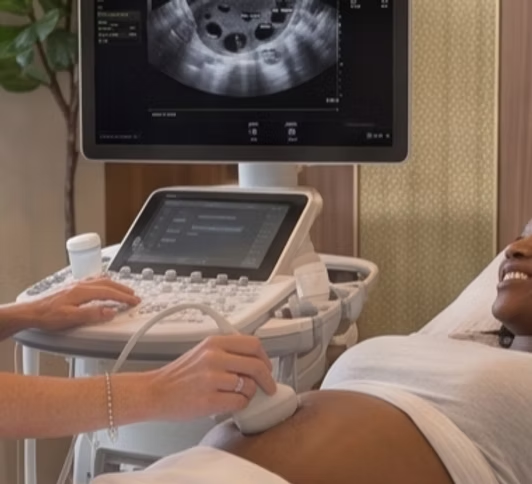
Follicle Tracking Ultrasound
Follicle tracking involves measuring developing follicles within the ovaries during the menstrual cycle.
One or more scans may be required to monitor follicle growth and changes in the endometrium. The timing and number of appointments depend on your cycle and the reason for monitoring.

Fertility Assessment
A fertility assessment ultrasound examines the uterus, endometrium and ovaries. It may help identify visible structural findings that could be relevant to conception or fertility treatment.

Antral Follicle Count Scan
An antral follicle count—often abbreviated to AFC—counts the small visible follicles within both ovaries during the early part of the menstrual cycle.
Antral follicle count can contribute to an assessment of ovarian reserve but should not be interpreted in isolation. It does not measure egg quality or determine whether natural conception will occur.

Fertility Treatment Monitoring
Ultrasound may be used to measure ovarian follicles and endometrial thickness during fertility treatment.
If your fertility clinic has requested monitoring, please provide its written protocol or measurement requirements before your appointment. Decisions about medication, trigger timing, egg collection or treatment changes must be made by your prescribing fertility clinic.
What Does a Fertility Ultrasound Examine?
Your sonographer will perform a systematic ultrasound assessment tailored to the reason for your appointment.
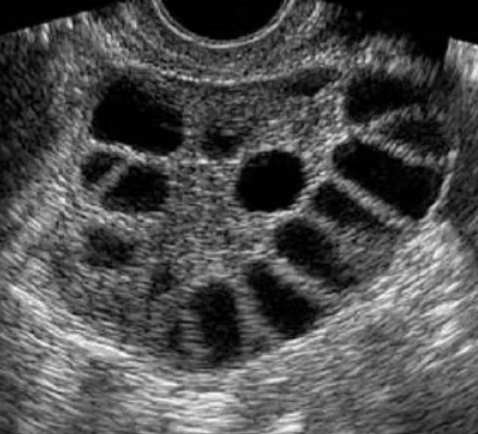
Right Ovary
The right ovary is assessed for its size, appearance, visible follicles and any identifiable ovarian cyst or abnormality.
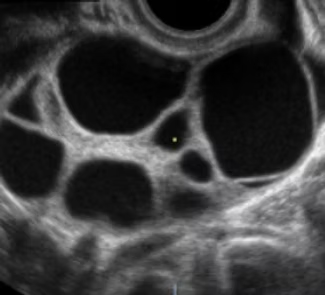
Left Ovary
The left ovary is assessed in the same way, allowing the appearance and follicle activity of both ovaries to be documented and compared.
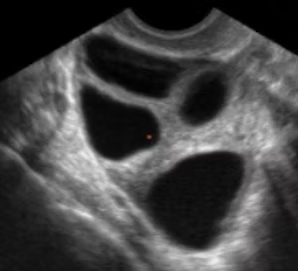
Antral Follicle Count
When an antral follicle count is requested, the small visible follicles within each ovary are counted and documented.
The scan is usually performed during the early follicular phase of the menstrual cycle.
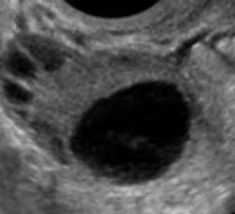
Developing Follicles
During follicle tracking, developing follicles are measured in millimetres. The number, location and size of relevant follicles are documented.
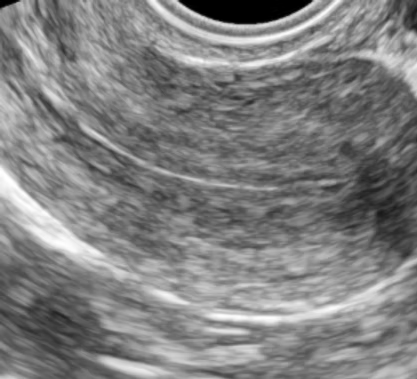
Endometrial Development
The endometrial thickness and appearance are documented during cycle monitoring to provide information about changes occurring throughout the cycle.
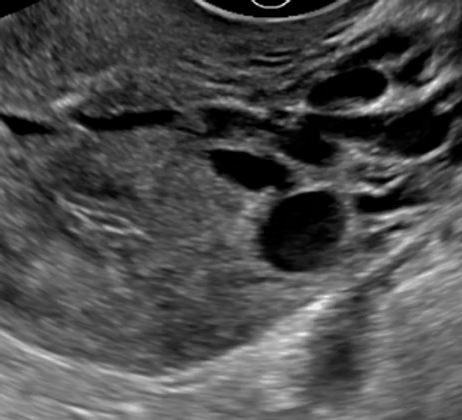
Adnexal Regions and Pelvic Cavity
The areas surrounding the uterus and ovaries are assessed for visible abnormalities and significant free fluid where relevant.
Why Patients Choose Us
Private diagnostics, run with NHS‑grade governance
- No GP referral required
- Findings explained during your scan
- Written report the same day
- Sonographer-led clinical governance
What Happens During a Fertility Ultrasound?
Before your scan, your sonographer will discuss your menstrual cycle, fertility history, the first day of your last period and the reason for your examination.
Please tell us if you are having a baseline fertility assessment, antral follicle count, natural-cycle monitoring, follicle tracking or fertility treatment, and provide any instructions from your fertility clinic.
Fertility ultrasound is usually performed transvaginally, as this provides detailed views of the uterus, endometrium, ovaries and follicles. The examination will be explained beforehand and performed only with your consent. A transabdominal scan may also be performed where appropriate.
For an antral follicle count, the visible small follicles within each ovary are counted. During follicle tracking, developing follicles are measured and the endometrium is assessed.
Your findings will be explained where appropriate, and your detailed digital report will usually be provided the same day.
Preparing for Your Fertility Ultrasound
For a transvaginal scan, you will usually be asked to empty your bladder. If a transabdominal scan is required, you may need a comfortably full bladder.
Antral follicle counts are commonly performed early in the menstrual cycle. Follicle-tracking scans should be timed according to your cycle or fertility-clinic protocol.
Please provide any fertility medication details, clinic instructions and specific measurements requested. MedHealth Ultrasound does not alter fertility medication or treatment plans.
What Happens if Something Is Found?
Ultrasound may identify findings such as ovarian cysts, fibroids, polycystic ovarian morphology or features that may be associated with adenomyosis or endometriosis.
Any relevant findings will be documented in your report. Where appropriate, you may be advised to share your results with your GP, gynaecologist or fertility specialist.
If you are undergoing fertility treatment, decisions about medication and treatment timing remain with your fertility clinic.
Limitations of Fertility Ultrasound
Fertility ultrasound provides valuable information about the uterus, endometrium, ovaries and follicles, but cannot provide a complete assessment of fertility.
An antral follicle count contributes to assessment of ovarian reserve but does not measure egg quality or predict conception. Follicle tracking assesses follicular development but cannot guarantee ovulation or pregnancy.
Routine fertility ultrasound also does not confirm whether the fallopian tubes are open and does not replace hormonal blood tests, semen analysis, tubal-patency testing or specialist fertility assessment.
A normal ultrasound does not exclude every condition that may affect fertility, including some forms of endometriosis.