
Private Pelvic Ultrasound in Portsmouth & Southampton
Clear answers. Fast access. Expert care.
A detailed assessment of the uterus, endometrium, ovaries and surrounding pelvic structures, helping investigate pelvic pain, abnormal bleeding, bloating, ovarian cysts, fibroids, PCOS, adenomyosis and suspected endometriosis.
£199 · Same-day digital report · No GP referral required
Is a Pelvic Ultrasound Right for Me?
- Pelvic or lower abdominal pain
- Heavy periods
- Painful periods
- Irregular menstrual bleeding
- Bleeding between periods
- Persistent pelvic pressure or discomfort
- Abdominal or pelvic bloating
- Suspected ovarian cysts
- Known or suspected fibroids
- Symptoms associated with adenomyosis or endometriosis
- Concerns about the ovaries or uterus
- Follow-up of a previously identified gynaecological finding





What Does a Pelvic Ultrasound Examine?
Your sonographer will perform a systematic assessment of the pelvic organs and surrounding structures.
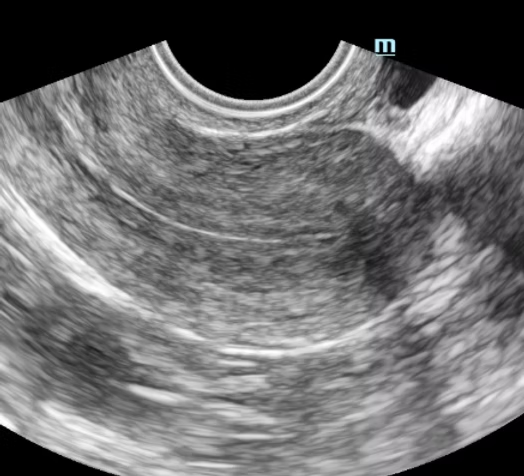
Uterus
The uterus is assessed for its position, shape, myometrial appearance and visible abnormalities such as fibroids or features associated with adenomyosis.

Endometrium
The endometrial lining is assessed in relation to menstrual status, symptoms and relevant clinical history.
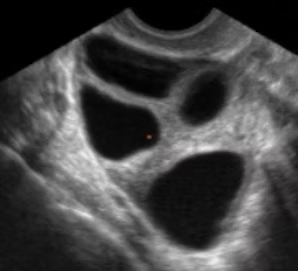
Ovaries
Both ovaries are assessed for their appearance, size, follicular pattern and abnormalities such as cysts or endometriomas.
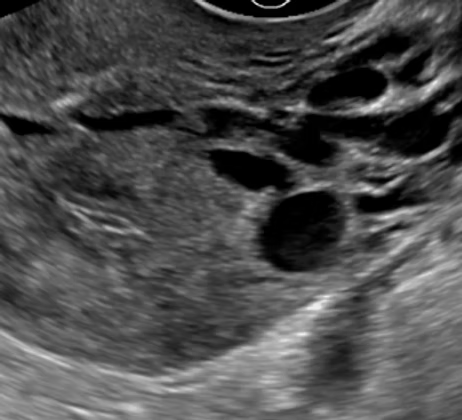
Adnexal Regions
The areas surrounding the ovaries and uterus are assessed for visible masses, fluid or other abnormalities.
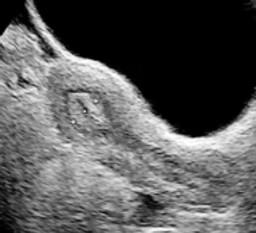
Pelvic Cavity
The pelvis is assessed for free fluid and other visible abnormalities within the limitations of ultrasound.
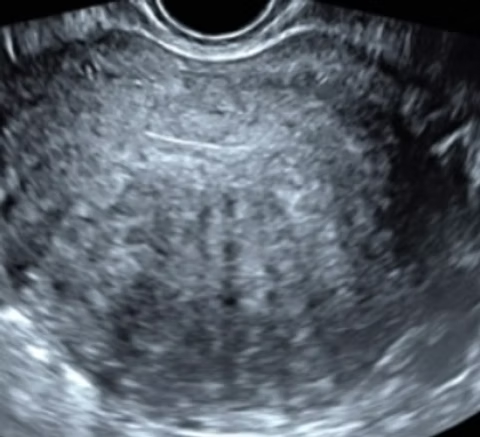
Adenomyosis & Endometriosis
The examination looks for recognised sonographic features associated with adenomyosis, ovarian endometriomas and, where appropriate, certain features of deep endometriosis. A normal ultrasound does not exclude endometriosis.
Why Patients Choose Us
Private diagnostics, run with NHS‑grade governance
- No GP referral required
- Findings explained during your scan
- Written report the same day
- Sonographer-led clinical governance
What to Expect
Before your scan, your sonographer will discuss your symptoms, relevant gynaecological history and the reason for your examination.
Your pelvic ultrasound may include a transabdominal scan, transvaginal scan, or both, depending on what is clinically appropriate. A transvaginal ultrasound provides more detailed views of the uterus, endometrium and ovaries and will only be performed after the procedure has been explained and with your consent. You remain in control throughout and can ask to stop at any time.
Where appropriate, your sonographer will explain the findings before you leave. Your detailed digital report is provided the same day.
Preparing for Your Pelvic Ultrasound
For the transabdominal scan, you will need a comfortably full bladder. Please follow the bladder preparation instructions provided with your appointment.
If a transvaginal scan is required, you will normally be asked to empty your bladder beforehand. Please continue your usual prescribed medication unless advised otherwise.
What Happens if Something Is Found?
Many pelvic ultrasound findings, such as simple ovarian cysts and fibroids, are common and benign.
Any findings will be documented clearly in your report and, where appropriate, explained to you. Recommendations are based on the ultrasound appearance together with factors such as your symptoms, age, menstrual status and clinical history.
You may be advised to share your report with your GP or gynaecologist, have follow-up imaging or undergo further investigation where appropriate.
Limitations of Pelvic Ultrasound
Ultrasound provides detailed assessment of the uterus, endometrium and ovaries, but it cannot identify every cause of pelvic or gynaecological symptoms.
Some conditions, including certain forms of endometriosis, may not be visible on routine ultrasound. A normal scan therefore does not exclude every gynaecological condition.
If symptoms persist, worsen or remain unexplained despite reassuring ultrasound findings, further medical or specialist gynaecological assessment may be appropriate.
Ready for Clearer Answers?
Book your private Ultrasound today with one of our expert Sonographers.