
Private Kidney and Bladder Ultrasound in Portsmouth & Southampton
Expert urinary ultrasound with same-day results
A detailed assessment of both kidneys and the bladder, including bladder emptying and the prostate in men where appropriate, helping investigate urinary symptoms, kidney pain, recurrent infections and suspected stones.
£179 · Same-day digital report · No GP referral required
Is Kidney and Bladder Ultrasound Right for Me?
You may wish to consider a kidney and bladder ultrasound if you are experiencing:
- Kidney, flank or lower back pain
- Recurrent urinary tract infections
- Blood in the urine
- Frequent urination
- Sudden urinary urgency
- Difficulty passing urine
- A weak or interrupted urine stream
- A feeling that your bladder does not empty fully
- Urinary retention
- A history of kidney stones
- Known kidney cysts
- Abnormal kidney blood-test results
- Concerns about prostate enlargement
- Follow-up of a previously identified kidney or bladder finding
For men, the scan includes an abdominal prostate ultrasound and a post-void residual urine measurement to help assess prostate size and bladder emptying.
You can self-refer directly to MedHealth Ultrasound without needing a GP referral.





What Does a Kidney and Bladder Ultrasound Examine?
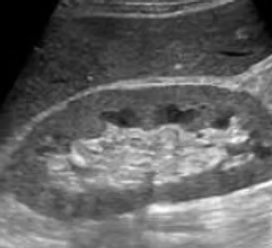
Kidneys
Both kidneys are assessed for size, shape, position and general ultrasound appearance. The scan may identify visible kidney cysts, kidney stones, dilatation or other structural abnormalities.
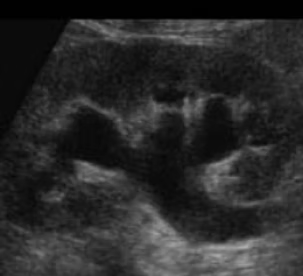
Renal Collecting Systems
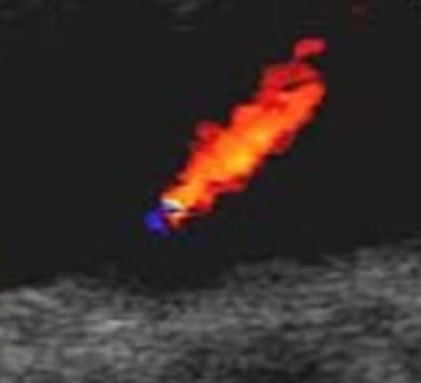
Ureters
The ureters carry urine from the kidneys to the bladder. Portions of the ureters may be assessed where visible, although they are not always fully seen on ultrasound.
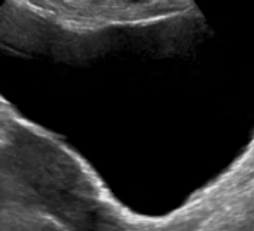
Urinary Bladder
The urinary bladder is assessed while comfortably full. Its outline, wall and contents are examined for visible abnormalities, including bladder stones, focal changes or other identifiable findings.
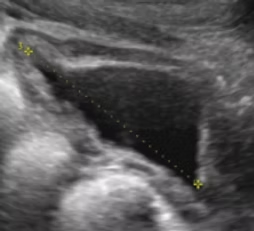
Bladder Emptying
You will usually be asked to empty your bladder during the appointment. A post-void residual urine measurement is then performed to assess how much urine remains and whether the bladder is emptying effectively.
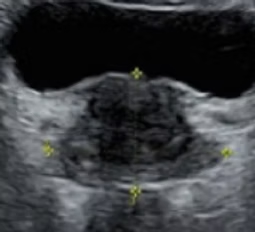
Prostate Assessment for Men
For men, the prostate is assessed through the lower abdomen. Its approximate size, volume and general ultrasound appearance are documented as part of the kidney, bladder and prostate ultrasound examination.
Why Patients Choose Us
Private diagnostics, run with NHS‑grade governance
- No GP referral required
- Findings explained during your scan
- Written report the same day
- Sonographer-led clinical governance
What to Expect
Your appointment usually takes 20–30 minutes.
Your sonographer will discuss your symptoms and medical history before gently scanning your abdomen using ultrasound gel. You may be asked to change position or briefly hold your breath to help obtain clear images.
The scan should not be painful. Findings will be explained where appropriate, and your detailed digital report will usually be provided the same day.
How to Prepare
- Please arrive with a comfortably full bladder.
- Follow the drinking instructions supplied with your appointment and avoid emptying your bladder beforehand.
- You may eat normally and take your usual prescribed medication unless advised otherwise.
- If maintaining a full bladder is difficult, please contact us before your appointment.
If We Find Something
Most ultrasound findings are not emergencies. If an abnormality is identified, we will explain the findings where appropriate and clearly document them in your report.
We may recommend discussing your results with your GP or another healthcare professional, or occasionally suggest further investigation.
Limitations of Ultrasound
Ultrasound provides useful structural assessment of the kidneys, bladder and prostate, but it cannot identify every cause of urinary symptoms. The ureters are not always fully visible, and some small stones or abnormalities may not be detected.
A normal scan does not exclude infection, inflammation or a functional urinary problem. If symptoms persist or worsen, further medical assessment may be required.
Ready for Clearer Answers?
Book your private Ultrasound today with one of our expert Sonographers.